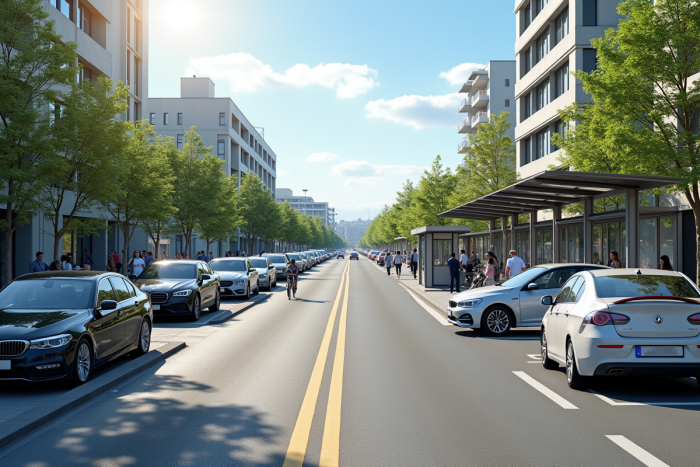
Every morning, thousands of commuters face traffic jams and the desperate search for a parking space in the city. In response to this issue, park-and-ride facilities prove to be an ingenious solution. These infrastructures allow users to leave their cars on the outskirts and reach their workplace via public transport.
The benefits are numerous:
- Reduction of stress
- Time savings
- Decrease in carbon footprint
Moreover, cities are investing in these park-and-ride facilities to ease traffic and improve the quality of life for urban residents. Shared mobility thus takes on its full meaning.
Park-and-ride facilities: a practical solution for commuters
Park-and-ride facilities, or P+R, offer innovative transportation solutions. They allow commuters to park their vehicles on the outskirts and continue their journey using public transport. This approach reduces congestion in city centers and facilitates sustainable mobility.
Strasbourg has implemented a Résidéo subscription, allowing residents to benefit from park-and-ride facilities at preferential rates. In Île-de-France, Île-de-France Mobilités has voted to create an additional 10,000 park-and-ride spaces, thus enhancing access to public transport for the region’s residents.
Régis Auriol, head of the strategy and parking management service, and Laurent Py, in charge of parking strategy, highlight the positive impact of these infrastructures on urban traffic management. They particularly mention the success of the Vinci Autoroutes carpooling parking in La Chapelle-Saint-Mesmin, a concrete example of a public-private partnership successfully meeting user needs.
- Reduction of stress related to parking search
- Decrease in CO2 emissions
- Help in decongesting city centers
Park-and-ride facilities represent an effective response to the challenges of modern mobility. They embody the synergy between innovation and environmental respect while improving the quality of life for commuters. 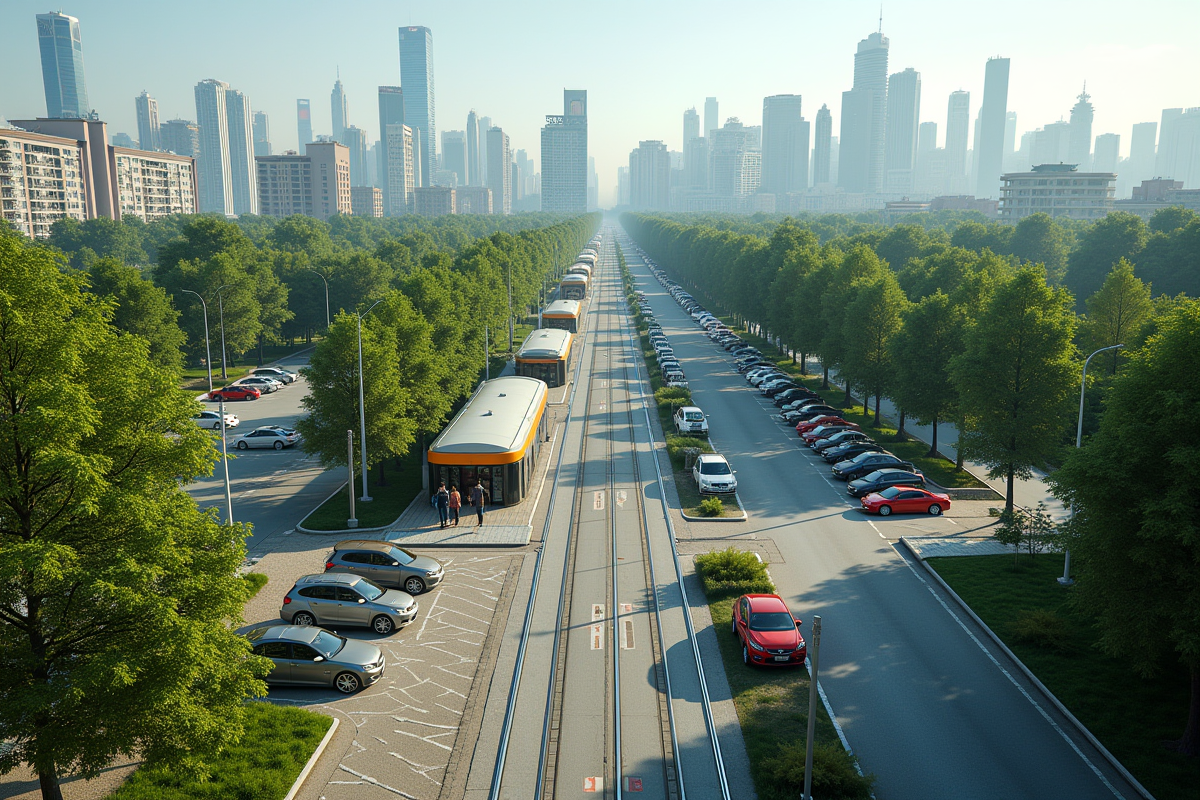
The economic and environmental benefits of park-and-ride facilities
Park-and-ride facilities provide substantial economic benefits. By reducing urban congestion, they limit costs associated with traffic jams and pollution. Studies show that every minute spent in traffic costs businesses and workers. The use of park-and-ride facilities optimizes these travel times by facilitating access to public transport.
- Reduction in fuel costs
- Decrease in parking fees in city centers
- Improvement in worker productivity
The environmental benefits are equally significant. By decreasing the number of cars circulating in city centers, park-and-ride facilities contribute to the reduction of CO2 emissions. They help improve air quality and combat climate change. The use of public transport, encouraged by these infrastructures, also reduces overall energy consumption.
Shared mobility, such as car-sharing and carpooling, finds a conducive environment for its development in park-and-ride facilities. Companies like Bolloré / Blue Solutions, PSA / FreeToMove, and Renault / Renault Mobility are investing in these solutions to offer more sustainable transportation alternatives. Carpooling, particularly useful for home-to-work trips, is encouraged by AOMs (mobility organizing authorities) and benefits from targeted communication campaigns.
Sylvain Laval, president of SMMAG, emphasizes the positive impact of park-and-ride facilities on traffic management and the quality of life for citizens. These initiatives, supported by the Banque des Territoires, demonstrate a collective willingness to promote more environmentally friendly and economically viable mobility solutions.