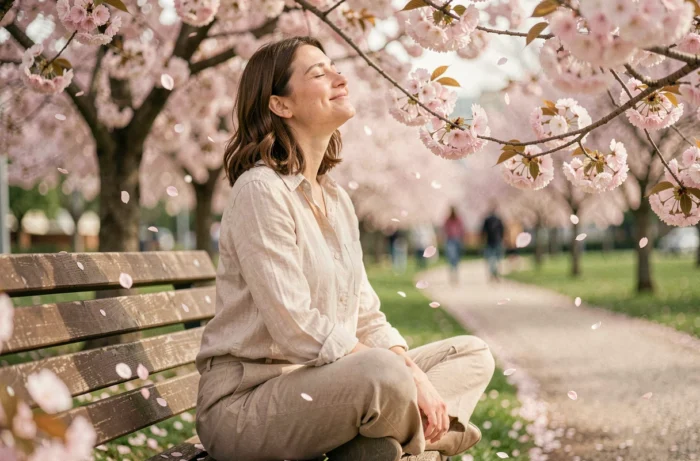
Spring is settling in, the light is gaining ground every day, and the body is receiving contradictory signals. On one hand, the lengthening days stimulate serotonin production. On the other, the time change and variations in brightness disrupt sleep and metabolism. Welcoming the spring renewal is not just about opening the windows: the body goes through an adaptation phase that deserves attention.
Time Change and Sleep Debt: The Hidden Brake on Spring Energy
We rarely talk about the physiological cost of the switch to daylight saving time. The night of the time change shortens sleep time by about forty minutes on average, with notable variations depending on chronotypes. Night owls are affected more than early risers.
This sleep debt, even if modest, impacts concentration, mood, and appetite regulation for several days. Passively waiting for the body to “get used to it” is not the most effective strategy.
Exposure to natural light in the morning is a central lever for adaptation. It advances the biological clock and enhances daytime alertness. In contrast, bright or bluish light in the evening delays melatonin secretion and exacerbates the shift. A regular waking rhythm remains the simplest action to reset one’s internal clock. Resources like encoreleprintemps.com address this seasonal dynamic from a practical and documented perspective.
Pollen and Climate Change: A Spring Season That Is Shifting
The renewal of nature is accompanied by a less pleasant phenomenon. The pollen season now begins well before the civil spring in some regions. The first cypress pollen can appear as early as January in the South, while birch dominates in spring in the North and East.
Climate change exacerbates this phenomenon. Milder winters and early springs advance the pollination of certain species. Hot and dry episodes extend the grass pollen season or promote the spread of ragweed. The weather can shift flowering periods by several days to several weeks, making traditional pollen calendars less reliable.
Enjoying the outdoors in spring therefore requires special attention for sensitive individuals. A few concrete guidelines help limit exposure:
- Check regional pollen forecasts before planning an extended outing in nature, keeping in mind that institutional monitoring of pollen is currently transitioning
- Prefer outings after a rain shower, when pollen concentrations in the air are temporarily reduced
- Ventilate the home early in the morning or late in the evening, times when pollen dispersion is generally lower
Light, Breathing, and Softness: Recalibrating the Body Without Jarring It
The classic spring temptation is to jumpstart everything at once: intense physical activity, detox diets, waking up at dawn. However, the body is coming out of a winter period that is often more sedentary, with a metabolism operating at a different pace. Forcing the restart creates more fatigue than it resolves.
The most coherent approach is based on gradualness. The natural morning light, already mentioned for sleep, also plays a role in regulating mood and overall energy. Twenty minutes of morning exposure is enough to send a clear signal to the body.
In terms of physical practice, yoga and breathing exercises offer an interesting compromise between physical mobilization and gentleness. They engage the body without triggering a cortisol spike, which is better suited for an organism in transition. Mindfulness meditation, even briefly, contributes to the same goal: supporting the seasonal transition rather than forcing it.

Infusions and Seasonal Plants: What We Know and What Remains Unclear
Competitors are multiplying recommendations on birch sap cures, detox infusions, and draining plants. These practices are part of a well-established popular tradition. Some users report a notable boost in vitality, while others observe no perceptible change.
What is documented is the role of hydration in supporting metabolism, particularly after winter when water consumption tends to decrease. Herbal infusions (nettle, dandelion, rosemary) at least provide regular hydration and a variety of plant compounds.
However, the available data do not allow us to conclude on the specific effectiveness of a spring “detox cure” compared to a balanced diet maintained throughout the year. The liver and kidneys continuously eliminate metabolic waste, without needing a seasonal “deep clean” to function.
- Herbal infusions contribute to daily hydration and diversify the intake of plant micronutrients
- A diet rich in seasonal vegetables (radishes, asparagus, spinach) naturally provides the fibers and vitamins the body needs in spring
- Dietary supplements or concentrated cures deserve professional advice, especially if undergoing medical treatment
Spring Balance: Adapting Your Rhythm to the Season Without Following a Fixed Protocol
The energy of spring is not a switch that you turn on. It is a gradual transition, influenced by sleep, light, diet, and the external environment, including pollen. Individual chronotypes, professional constraints, and sensitivity to allergens create very different realities from one person to another.
The most cost-effective action remains the regularity of waking and morning light exposure. The rest, whether it be yoga, infusions, or walking in nature, serves as a complement whose effect largely depends on the consistency with which it is practiced.
Spring modifies the environment before modifying the organism. The body adjusts over several days, sometimes two weeks, provided a stable waking rhythm and regular morning light exposure are maintained.