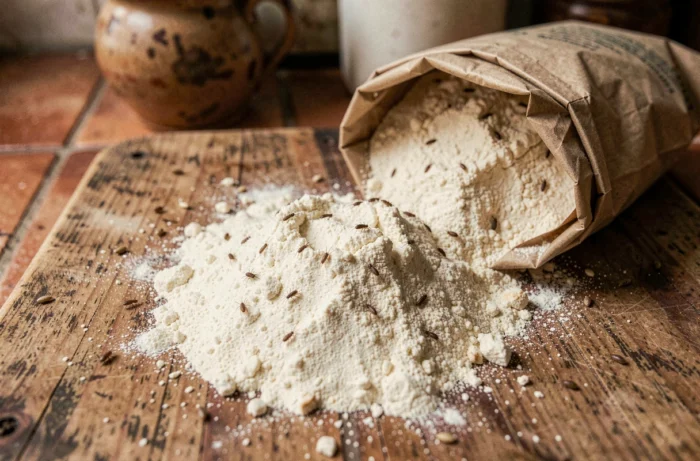
A bag of flour forgotten for three weeks in a damp cupboard, and when you open it, the surface seems to move. This almost imperceptible movement is often a sign of a colony of flour mites, those microscopic mites that proliferate in dry goods. We tend to ignore them because they are not visible to the naked eye, but their presence poses concrete problems, especially for allergic individuals.
Flour mite: several species behind a single name
The term “mite” is misleading. It is used as if it refers to a single insect, while it actually encompasses several distinct species of storage mites. The most common in our kitchens are Acarus siro, Tyrophagus putrescentiae, and Lepidoglyphus destructor.
This distinction is not merely academic. Each species reacts differently to ambient humidity and the type of substrate. Correctly identifying the species allows for better targeting of the source of the problem in the cupboard.
When we talk about the dangers of the flour mite, we are indeed referring to a group of mites whose common trait is their appetite for dry food products and their ability to reproduce very quickly in a favorable environment.

Allergic risk related to mites: what you need to know
The most underestimated danger of the mite is not the degradation of the flour. It is the allergic reaction it can trigger in individuals already sensitized to house dust mites.
Preparing pancakes, waffles, or a cake with contaminated flour exposes you to a real allergic risk, even if the food is cooked.
Symptoms to watch for after ingestion
In a person allergic to mites, consuming a dish made with infested flour can cause:
- Itching, swelling of the face or throat, and skin rashes appearing within minutes after the meal
- Digestive issues (nausea, abdominal cramps) sometimes confused with classic food poisoning
- In the most severe cases, an anaphylactic reaction requiring urgent medical attention
Humidity and storage: the real cause of a mite infestation
It is often thought that mites “arrive” with the bag of flour purchased in the store. This is possible, but in most cases, it is the cupboard environment that creates the conditions for proliferation. A product stored in a dry and cool place presents a significantly lower risk than flour left in a cabinet under the sink or near a steam source.
Humidity is the determining factor. Storage mites require a high relative humidity level to reproduce. Reducing this humidity is generally more effective than a chemical treatment applied afterward.
Practical measures to limit the risk
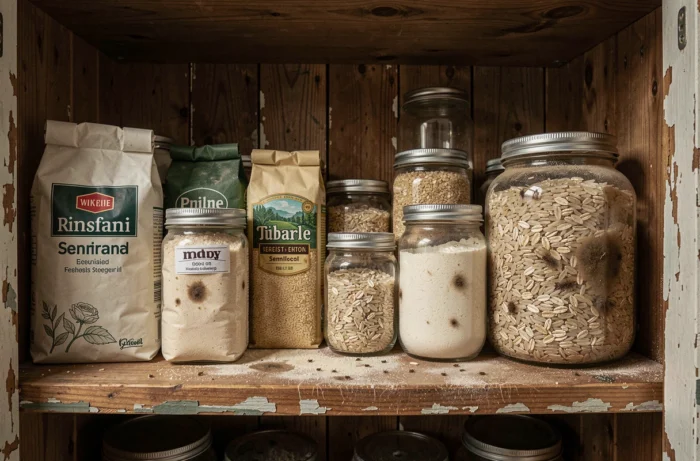
Transferring flour into an airtight container as soon as you buy it serves two purposes: preventing new contamination from the outside and cutting off access to the ambient humidity of the cupboard. The original paper bag offers no protection.
- Prefer glass jars or silicone-sealed boxes, cleaned and dried before filling
- Store flours, semolina, flakes, and yeast away from steam areas (oven, dishwasher, sink)
- Regularly check products opened for more than two weeks, especially during warm and humid periods
- Do not hesitate to discard a product whose surface shows fine, mobile dust, a characteristic sign of active infestation
Mites in the food service industry: a health obligation, not just an inconvenience
The problem is not limited to home kitchens. For food service professionals and retailers, the presence of storage mites constitutes a failure to meet the requirements of the health control plan (PMS). The European regulation on food hygiene mandates a documented and regularly updated pest control plan.
In the event of a health inspection, an infestation of mites in a stock of flour can lead to corrective measures, or even a product recall. The outcomes vary on this point depending on the inspections, but the principle remains the same: traceability of storage and stock rotation are concrete levers to avoid the problem.
A restaurant that buys flour in bulk and stores it for several weeks in a poorly ventilated storage area is at greater risk than an establishment that splits its purchases and controls its storage conditions.
Flour mites are not a visible problem, and that is precisely what makes them problematic. Prevention relies on controlling humidity and storage, not on a curative treatment. For individuals allergic to mites, vigilance regarding the state of flours and dry products is not an excessive precaution; it is a full-fledged food safety measure.