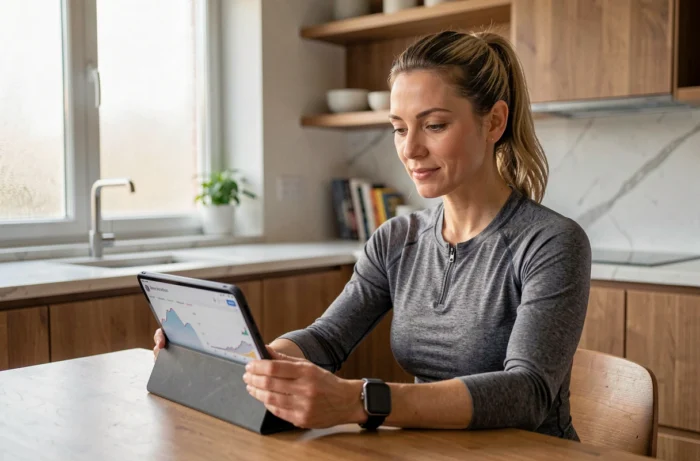
A diabetic patient scans their continuous glucose monitor before heading to work. The data is sent to their phone, then to their doctor’s dashboard. This seemingly trivial action, repeated every morning, relies on a technological chain that did not exist ten years ago. Health technology is no longer limited to hospital equipment: it fits in pockets, on wrists, and in living rooms.
Wearable Sensors and Daily Patient Monitoring
Today, we wear connected watches and rings capable of measuring heart rate, oxygen saturation, or sleep quality. These continuously collected health data allow for the detection of anomalies long before a symptom becomes visible.
The concrete change for caregivers is the ability to monitor a patient between consultations. A cardiologist can receive an alert if a treated patient’s heart rate goes outside the expected range. We are moving from a reactive model (the patient consults when they are in pain) to a preventive model (the system signals a deviation).
Specialized resources like lasantedemain.com document this transition towards connected and anticipatory care, focusing on the tools that redefine the relationship between patients and professionals.
Feedback varies on the reliability of certain consumer-grade sensors, particularly for measuring blood pressure at the wrist. Accuracy depends greatly on the model and its positioning. For certified medical devices, however, remote supervision reduces emergency visits for chronic patients.
Generative AI in Consultations: What the French Framework Allows
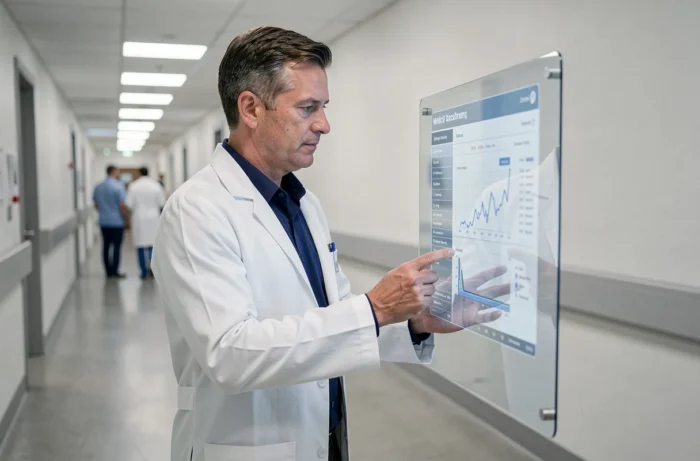
Generative artificial intelligence has entered the medical office, but not without rules. The High Authority of Health adopted its first operational recommendations on the use of generative AI in health in October 2025.
Three use cases are explicitly considered:
- Automatic transcription of consultations, to free the practitioner from manual entry while maintaining a structured record of the exchange.
- Pre-filling of administrative documents (reports, certificates), with mandatory proofreading by the professional before validation.
- Real-time translation during consultations with non-French-speaking patients, to limit misunderstandings.
The common point of these uses: human supervision remains mandatory at every stage. AI proposes, the caregiver validates. No automatically generated document can be sent to the patient without proofreading.
Transparency Obligation Since August 2026
European regulation has required since August 2, 2026, that any health conversational assistant clearly informs the user that they are interacting with an artificial intelligence system. A medical chatbot can no longer be deployed without this explicit mention.
For systems classified as high risk (diagnostic assistance, triage), additional obligations are gradually applied. Specifically, a hospital that installs a radiological decision support tool must document its validation process, its training datasets, and its human control mechanisms.
Health Data and Interoperability: The European Regulation Changes the Game
We often talk about health data without addressing the underlying issue: their compartmentalization. A patient followed in three different establishments may have three incompatible records. The interoperability of systems remains the main barrier to e-health in France and Europe.
The European regulation (EU) 2025/327, which came into effect on March 26, 2025, establishes a framework to unlock this situation. It organizes two axes:
- Patients’ access to their own health data, regardless of the establishment or European country where it was produced.
- The regulated reuse of this data for research, innovation, and public policies, with guarantees of pseudonymization.
- A progressive timeline of obligations for e-health stakeholders, with deadlines extending to 2031.
For professionals on the ground, this means that medical software publishers will need to adapt their systems to common standards. Hospitals and practices that invest now in interoperable solutions will avoid costly migrations in a few years.
Cognitive Stimulation and Technologies for Seniors
In nursing homes and support structures, cognitive stimulation tablets have become a common tool. Residents are offered memory, visual recognition, or coordination exercises tailored to their level.
The interest of these devices goes beyond simple games. The data collected during sessions allows care teams to track a resident’s cognitive evolution over several months. A regular decline in scores on a specific type of exercise may trigger a targeted medical assessment.
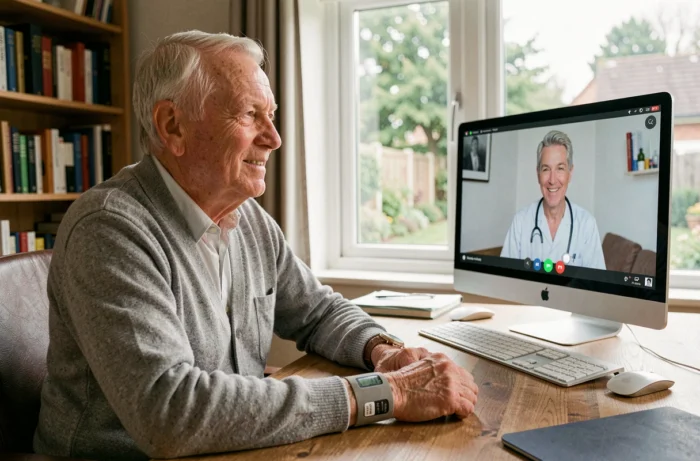
Technology also plays a role in maintaining seniors at home. Fall detectors, connected pill dispensers, and simplified video conferencing systems reduce isolation while providing a layer of safety. Technology-assisted home care delays institutionalization for some autonomous elderly individuals.
Practical Limits to Know
The adoption of these tools largely depends on human support. A tablet placed on a bedside table without training or motivation from staff brings no benefit. The structures that achieve results are those that integrate cognitive stimulation into a broader activity program, with trained referents.
Connectivity also remains a barrier in some rural establishments. Without a stable network, connected tools lose their real-time monitoring function and are limited to offline use.
The health of tomorrow is built on already operational building blocks: wearable sensors, regulated AI, interoperable data, assisted cognitive stimulation. The European regulatory framework accelerates the movement, with concrete deadlines extending to 2031. What will make the difference between a useful tool and a forgotten gadget is the training of teams and the quality of network infrastructure, two topics far less spectacular than AI, but equally crucial.