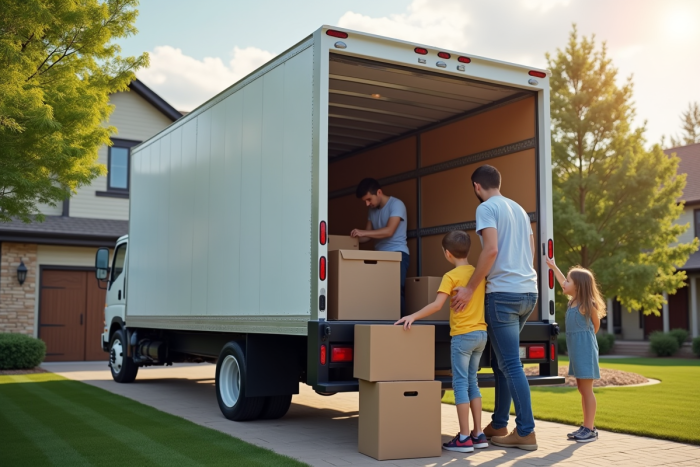
Changing residence can quickly become a headache without proper organization. The choice of transport vehicle is fundamental for a smooth move. Should you opt for a van, a truck, or a larger utility vehicle? The answer depends on the volume to be transported and the distance to be covered.
Optimizing space by using boxes of similar sizes and protecting fragile items with blankets can save valuable time. Planning each step, from loading to unloading, helps reduce stress and ensures everything goes smoothly.
Choosing the Right Vehicle for Your Move
For a successful move, the choice of vehicle should not be left to chance. Several criteria must be considered to determine the necessary volume and select the appropriate vehicle.
Assessing the Volume to be Transported
The volume of belongings to be moved is the first point to consider. You need to accurately calculate the number of cubic meters required. For this, an estimate can be made based on the number of rooms and their contents.
- A studio or small apartment (up to 2 rooms): a utility vehicle of 12 to 20 m³ may suffice.
- A 3 to 4-room home: prefer a truck of 20 to 30 m³.
- A larger house or apartment: opt for a large moving truck of over 30 m³.
Considering the Distance and Access
The distance to be traveled and access constraints to the residence are also determining factors. For a move in the city center, a compact utility vehicle may be more maneuverable and allow for easier parking. Conversely, for longer trips or rural areas, a larger truck may be preferable to minimize back-and-forth trips.
Taking into Account the Specifics of the Goods
Some items require special attention during transport. Bulky furniture, fragile items, or appliances necessitate choosing a vehicle equipped with securing and protection systems. Renting a vehicle with a lift gate can facilitate loading heavy items.
The rental of the appropriate vehicle relies on a precise analysis of the specific needs for each move.
Optimizing Loading and Unloading
Preparing and Organizing Boxes
For efficient loading, preparing the boxes is crucial. Use boxes of various sizes and ensure not to overload them. Label each box with its contents and the destination room, which will greatly facilitate unloading.
- Fragile boxes: wrap fragile items in bubble wrap and indicate ‘fragile’ on the box.
- Heavy boxes: distribute the weight to avoid making them too heavy to carry.
Optimizing Space in the Vehicle
Organizing the loading of the vehicle optimally allows you to maximize the available space and ensure the safety of the transported goods. Place the heaviest items at the back of the truck, against the cab, to stabilize the vehicle.
- Furniture: disassemble furniture when possible to save space.
- Bulky items: place bulky items first, then fill the gaps with smaller boxes and bags.
Facilitating Unloading
Unloading should be anticipated to avoid any loss of time. Plan an unloading strategy based on the layout of the new residence. Place the boxes directly in the corresponding rooms to facilitate setup.
- Access: ensure you have clear access to the new residence.
- Order of unloading: start with furniture and bulky items, then the boxes.
The presence of professional movers can significantly simplify these operations thanks to their expertise and appropriate equipment.
Practical Tips for a Stress-Free Move
Anticipating Administrative Formalities
To avoid last-minute surprises, plan your administrative procedures as soon as you announce your move.
- Notify your address change to EDF and your ISP.
- If you have children, enroll them in their new school or daycare well in advance.
- Tenants must give their notice to the landlord and arrange for a move-out inspection.
Managing Children and Pets
The move can be disruptive for young family members and pets. Take measures to acclimate them gently.
- Explain the moving process to your children and involve them in the preparations.
- For your pets, set up a quiet room where they can retreat during the move.
Planning the Logistical Aspects
Ensure everything is in order for the big day to minimize unforeseen events.
- Reserve a parking spot for the moving truck near your residence.
- If you are moving during school holidays, anticipate busy periods.
- Use a mail forwarding service to avoid missing anything.
These steps, although tedious, are essential for a calm and stress-free move.