
When looking for a pair of sandals with an anatomical sole for summer, we often come across a price that exceeds the planned budget, and the reflection begins: are there brands that offer comparable support without paying the German premium? The short answer is yes, but not just any brands.
The comfort sandal market has structured itself in recent years around very different use cases. It is precisely this specialization that makes some competitors of Birkenstock more relevant than others, depending on what one expects from their footwear.
Comfort sandals and European production: a criterion that comparisons overlook
When comparing sandal brands, we talk about soles, cork, leather, and price. We rarely discuss where the pair is assembled. However, geographical origin weighs heavily on the product’s durability, restocking times, and the consistency of a “responsible” narrative that almost all brands claim.
Birkenstock produces in Germany, allowing it to control its supply chain and adjust its volumes. A few competitors play the same card: Bayton manufactures in Portugal, a positioning that gives it access to recognized leather craftsmanship while maintaining tighter pricing. La Botte Gardiane, in Camargue, remains in a limited artisanal niche in volume but solid in finishing.
Several brands that are very visible in online comparisons outsource to Asia. This is not a flaw in itself, but the traceability of production changes the game regarding the actual longevity of the sandal. We have all had a pair whose sole detached after two summers: the problem often stems from there.
When spotting Birkenstock’s competing brands in a comparison, checking the country of manufacture remains a useful reflex before pulling out the card.
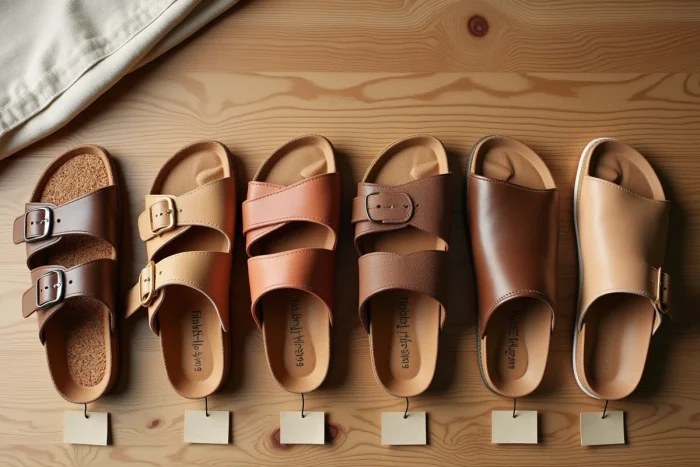
Teva, Chaco, Scholl: three rivals of Birkenstock, three distinct field uses
Putting Teva, Chaco, and Scholl in the same basket because they make “comfortable sandals” is like saying that a trail and a city car do the same thing because they both have four wheels. Each meets a specific need, and starting from the intended use helps avoid bad purchases.
Teva: city-trail versatility
Teva has built its reputation on the strap sandal with a grippy sole, designed for both riverbanks and streets. The support comes from adjustable tightening, not from a molded sole. This is the brand to choose if you alternate between pavement and dirt paths in the same day. Feedback varies on the lifespan of the inner foam after intensive use, but the grip remains a strong point.
Chaco: robustness and customization
Chaco pushes the envelope further on durability. The strap system continues under the sole, providing a very precise fit for the foot. This is more of a lightweight hiking tool than a terrace sandal.
Scholl: medical comfort first
Scholl comes from the world of podiatry. The sole does not share the same philosophy as Birkenstock: it focuses on cushioning rather than anatomical molding in cork. For someone who spends the day standing on a hard surface (restaurant, hospital), Scholl remains the most suitable reflex for prolonged static comfort.
- Teva: grip, lightweight, quick-drying, ideal for mixed water/walking activities
- Chaco: adjustable strap, designed for hiking and long-term use
- Scholl: medical cushioning, soft sole, designed for standing on hard surfaces
Affordable sandal alternatives: Bayton and Chaussea models against Birkenstock
The entry-level segment is the most dynamic. Price pressure is pushing accessible brands to refine their offerings, to the point that some pairs under thirty euros adopt the visual codes of the Arizona (double strap, thick sole) with improved finishing quality.
Bayton stands out with a mid-range positioning: reasonable prices, manufacturing in Portugal, recycled materials on certain models. We are not dealing with Birkenstock in terms of molded cork soles, but the brand precisely targets buyers who want a similar look without exceeding a certain budget.
At Chaussea, unbranded models replicate the double strap design for a significantly lower price. The compromise lies in the lifespan: the sole flattens faster, and synthetic leather shows wear more quickly. For occasional use (vacation, weekend), they hold up. For a daily pair worn six months a year, the difference is noticeable by the second season.

Eco-friendly sandals: the new playground for Birkenstock’s competitors
Birkenstock communicates about natural cork and leather tanned in Germany. Its rivals have understood that this field is attackable by going further on material transparency.
Several brands offer sandals with anatomical soles without any animal components. The vegan market in comfort footwear is no longer trivial. There are now models with recycled cork soles, certified microfiber straps, and water-based adhesives.
Bayton, for example, incorporates recycled cork in certain references while maintaining European manufacturing and an accessible price. The criterion that distinguishes these brands is no longer style but proof of durability. A certification (GOTS, Oeko-Tex) is worth more than a self-proclaimed “eco” logo on a product sheet. We save time by checking labels before comparing models.
The comfort sandal market in 2025 is no longer just about finding “the same thing as Birkenstock for less.” Each brand occupies a specific technical or ethical niche. Starting from actual use (active walking, standing, urban look, tight budget) remains the most reliable filter for choosing the right pair.